
“There’s no greater form of activism than sitting around a table sharing kindness"
On Thursday 7th May, the Cultural Institute hosted a workshop asking what happens when creativity becomes part of how we live with long-term health challenges. The workshop brought together artists, healthcare professionals, researchers, policy colleagues and people living with long‑term conditions, and offered a chance to share practice, make connections and imagine what creative health could like if it were available to everyone who needs it.
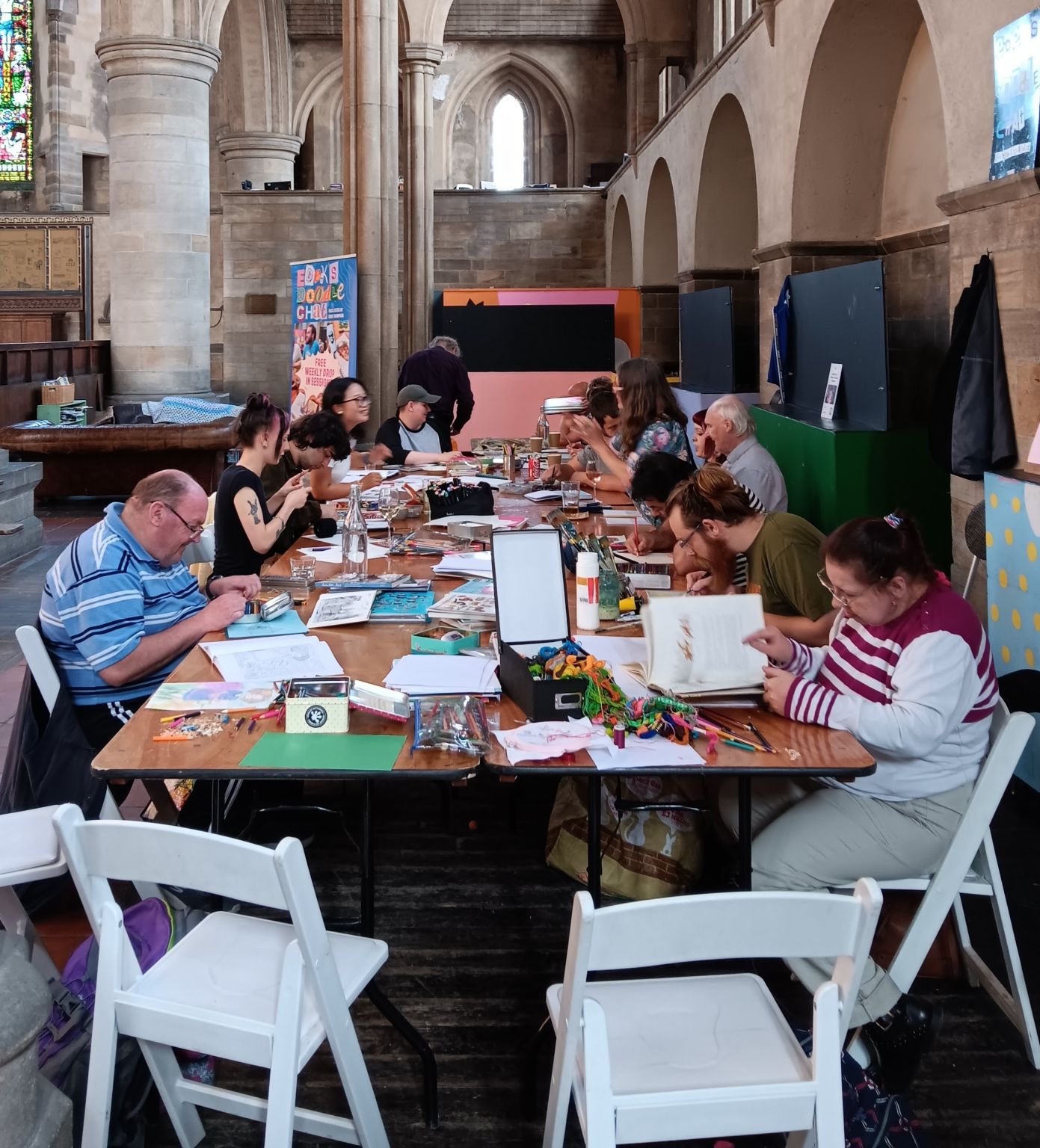
We began the day by inviting participants to share their own experiences of creative health. Mark and Caroline spoke about life after stroke, describing how trust, peer groups and creative expression helped rebuild confidence and connection. Lucy shared how writing, poetry and craft supported her through long periods of illness, offering a gentler way to inhabit her body and make sense of fluctuating symptoms. We also heard from Edgar and Edek, whose work with Doodle Chat showed how simple, low‑pressure creative spaces can reduce isolation and help people find language for experiences that are hard to articulate.
These stories set the tone for the day. People spoke openly, listened closely, and recognised parts of their own stories in what others shared. It created a foundation of honesty and care that underpinned the rest of our time together.
As the morning unfolded, a theme emerged again and again: creativity helps people feel less alone. One participant told us that creative health practices had “stopped me feeling alone. It’s helped me make sense of who I am, what is possible in my life, and it’s helped me build lasting connections.” People spoke about how being with others who “get it” had supported their mental health, helped them advocate for themselves, and made everyday life feel more manageable.
In the afternoon, we invited participants to help shape a short policy-style document capturing what matters most in creative health work for people with long-term conditions. The conversations were thoughtful and generous. People shared what they wished services understood, what helps them keep going, and what gets in the way. The document will be shared widely soon.
A moment that stayed with many of us came from Ed, who said, “There’s no greater form of activism than sitting around a table sharing kindness and ignoring the news.” It captured something essential about the day: that creative health is not only about activities, but about the conditions that allow people to feel safe, connected and fully human.
As we look ahead, we’ll be focusing on how to make creativity more available to people living with long-term conditions across our region. If you’d like to follow the next steps in this work, follow us on LinkedIn.